KNOW, Grow, Love: The Plants of the Bible – Hyssop

Growing Hyssop

Hyssop and the Bible

Planting Hyssop
Giving Hyssop a home in my garden!

What did people do in the days of the Bible when illness sprung up in tents or houses? Especially when living in close quarters to each other. How did they keep sickness from spreading?   How did they cleanse themselves after moving or burying the bodies of the dead? What about their homes? What did one do for cleanliness in their homes? They didn't run to their local pharmacy and pick up cough medicine, visit their Doctor for a prescription or pick up cleaning supplies at the local grocery store.   What most did in those days was use plants! Not any plant though.  Hyssop! Hyssop is one of the most documented plants for disease, mold and illness found in the Bible!  So what is Hyssop? 

Hyssop in the herb garden
Finding a spot for Hyssop in my herb garden

What is Hyssop?

Hyssop, called Hyssop Officinalis, is an evergreen plant commonly known as a garden herb and is classified in the Mint family. Hyssop originated from Southern Europe, the Middle East and Central Asia, it can be grown in zones 4-9 and gets approximately 24 to 30 inches tall. It’s known to help with cough, respiratory issues like bronchitis, asthma, fever and ulcers as well as common cold symptoms, parasites, insect bites, stings and increasing circulation in the body.  Hyssop can help with muscle pain and inflammation or reduce bruising when used topically as a healing balm and it's effective for digestion including optimizing the digestion process.  For Women, Hyssop has been used for relieving premenstrual symptoms such as cramps and pain, help with anxiety and stress and even lowering blood pressure.  

Proud Hyssop mama
Proud Hyssop mama

Hyssop is truly an amazing plant!  But it wasn't just for ailments. Hyssop was widely available in the days of the Bible. It grew across Israel and the surrounding areas of the middle east.  As such it was also used as a herb for flavoring.  It can be used in savory dishes like stews, soups or roasted vegetables, raw in salads or as a garnish.  Hyssop has a minty floral flavor so it has also been used in liqueurs, teas and baked goods.  How do we know this is the Hyssop the Bible talks about?

Hyssop or Zaatar?  The Biblical Debate

Young Hyssop Plant
Young Hyssop Plant

That's a good question! One that has absolutely been explored and highly debated.  Some say Hyssop Officinalis is not the plant of the Bible and insist the plant referenced as Hyssop (Hebrew: אזוב, ezov) is Zaatar, Origanum Syriacum. However the confusing thing about Zaatar is that the actual spice known as Zaatar is not a single plant.  Zaatar, the spice,  is made from a mix of many plants.  It includes the Zaatar plant,  Origanum Syriacum and other spices like Oregano, Thyme, Marjoram and sometimes includes seeds like sesame seeds.  Zaatar spice recipes are passed down through generations and are specialized to what each family making them may love. And yes, I will dig deeper into that in our Love Hyssop section. For now though, which plant is it?   Many, but not all,  debaters will agree that the plant known as Zaatar,  (Origanum Syriacum) is more likely the actual Hyssop of the Bible. Why? Because the characteristics of Origanum Syriacum more likely match the characteristics of the area the people of the bible were living in.

Zaatar or Hyssop?
Zaatar or Hyssop?

Characteristics of Zaatar the plant?

Origanum Syriacum hereafter, called Zaatar, is a tender perennial that can grow up to 24” tall in zones 9 - 11. These are pretty warm zones. Zaatar is a plant that loves the heat.  Very much like the area the people of the Bible would have lived in. Zaatar, like hyssop,  has also been used medicinally.

Medicinal properties of Hyssop
Hyssop, the plant of cleanliness

Its uses range from things like heart problems, cough, toothaches, colds, anxiety and wounds.  Zaatar is also a part of the Mint family. It is an upright herb which is neat, to me anyway, as most Oregano fall over! It has gray to silver velvet like leaves topped with white flowers.  The Greek meaning of the plant is made from oros - mountain and ganos which means joy. So the name means Joy of the mountains.  That is another thing about this plant I personally think is awesome.  I mean, who doesn't want to have a bit of joy from the mountains in their garden?  So which one is Hyssop?  Since we can't 100% confirm we will cover both! A two for one so to speak.  Because more is always better in the garden!

Zaatar
Zaatar

Where does Hyssop Appear in Scripture?

Seeing everything about the Hyssop plant may leave you wondering what it has to do with the Bible? First, this beautiful plant is actually found in 12 different verses in the Bible. That's more than any of the other plants we will look at together. That in itself makes it interesting. Second, you will find that each verse has something to do with cleansing sickness, mold or washing people of sin.   But to me personally it has a far deeper meaning; as one of the verses lands us right with Christ on the day of his crucifixion and leads us to his final act of removing sin from the people of the world. So let's start our journey by looking quickly at the Bible verses that highlight it:

  • The Israelites used Hyssop to protect their first born from death during the passover, Ex. 12:22,  “22 And ye shall take a bunch of hyssop, and dip it in the blood that is in the bason, and strike the lintel and the two side posts with the blood that is in the bason; and none of you shall go out at the door of his house until the morning.”


  • Managing and cleansing any sick with leprosy  Lev. 14: 4-6, “4 Then shall the priest command to take for him that is to be cleansed two birds alive and clean, and cedar wood, and scarlet, and hyssop… 6 As for the living bird, he shall take it, and the cedar wood, and the scarlet, and the hyssop, and shall dip them and the living bird in the blood of the bird that was killed over the running water”
  • Cleansing a house after leprosy Lev. 14: 49, 51-52, “49 And he shall take to cleanse the house two birds, and cedar wood, and scarlet, and hyssop…51 And he shall take the cedar wood, and the hyssop, and the scarlet, and the living bird, and dip them in the blood of the slain bird, and in the running water, and sprinkle the house seven times… 52 And he shall cleanse the house with the blood of the bird, and with the running water, and with the living bird, and with the cedar wood, and with the hyssop, and with the scarlet…”


  • Cleansing the people of sin with sacrifice & purified water & cleansing the person doing the cleansing  Num.19: 6, “6 And the priest shall take cedar wood, and hyssop, and scarlet, and cast it into the midst of the burning of the heifer.”
  • Cleansing anyone who touched the dead, moved the bones of the dead in a graveyard or had a death occur in a tent or home. Num. 19:18, “18 And a clean person shall take hyssop, and dip it in the water, and sprinkle it upon the tent, and upon all the vessels, and upon the persons that were there, and upon him that touched a bone, or one slain, or one dead, or a grave...


  • King Solomon spoke of the plants and trees and called out Hyssop 1 Kin. 4:33, “33 And he spake of trees, from the cedar tree that is in Lebanon even unto the hyssop that springeth out of the wall: he spake also of beasts, and of fowl, and of creeping things, and of fishes.”
  • King David cried to God to "cleanse me with Hyssop” after he committed adultery and caused the death of one of his men, yes he planned a murder. Ps. 51:7, “7 Purge me with hyssop, and I shall be clean: wash me, and I shall be whiter than snow.”
  • Moses after speaking every precept to all the people according to the law, he took the blood of calves and goats, with water, scarlet wool, and hyssop, and sprinkled both the book itself and all the people to cleanse them of their sins. Heb. 9:19-20, “19 For when Moses had spoken every precept to all the people according to the law, he took the blood of calves and of goats, with water, and scarlet wool, and hyssop, and sprinkled both the book, and all the people, 20 saying, This is the blood of the covenant which God has commanded you.”
  • Used at the crucifixion of Jesus Christ John 19:29, “19 Now there was set a vessel full of vinegar: and they filled a spunge with vinegar, and put it upon hyssop, and put it to his mouth.”

What's Next?

Hyssop has traveled across generations, lands, Biblical Authors and past many, many kitchens and gardens just to arrive in our own gardens today. God felt it was such an important plant he mentioned it 12 different times and wrote its use directly into the laws of the people of Israel.   Now we can use it too and study it starting with Exodus!   Before we move forward though... do these 2 things: 

1) If you missed the introduction to this series find it here -  Welcome to the Know, Grow, Love SeriesThis is Hyssop🌿

2) Take some personal study time with God.  Read through each of the chapters associated with the above passages, and any other on the outline that sound interesting to you, then come back and let's travel back to the time of Pharaoh, Moses and the book of Exodus together!

How do we do that?  The book !  Know, Grow, Love: The Plants of the Bible -  Hyssop is coming soon!  It will include what we can learn from these passages in our lives today; and, how to grow and use Hyssop in your own garden, kitchen, and herbal pantry. Sign up below to be notified the moment it's live and lets dig into each passage together, one chapter at a time.

Oma

Welcome to the Know, Grow, Love Series

A Moment of prayer in the Garden

Know, Grow, Love, The Plants of the Bible


Welcome to the Know, Grow, Love series!  We will ultimately cover so many different plants in this series and I hope you will join me in Knowing, Growing and Loving each one we look at.  Every series will have a specific plant we dive into.  However this first series will have many as we will be covering the plants of the Bible. Why? Because there are so many amazing plants found in Gods word; how could I not what to understand them?  And more so... when it comes to plants in general how could I be a gardener and not love them?  Their smell, look, taste and texture give us so much joy!  Simply walking on grass, what has now been coined as grounding, has been shown to lower stress levels, strengthen foot and leg muscles, help with sleep and improve mental health.  No wonder God created grass, not man, as the first forms of life.

Before God created man he planted a Garden

Enjoying the View down the path
barefoot in the Garden

 Grass you say?  Yes Genesis 1:11 tells us, “And God said , Let the earth bring forth grass, the herb yielding seed, and the fruit tree yielding fruit after his kind, whose seed is in itself, upon the earth: and it was so”.  This was day 3; and man was not even there yet!  Seeing how he created us right after this, I am confident he knew that man was coming.  His creation of the grass and herbs and fruit trees was not simply guesswork. Why?   Because, God has a logical order about him. He does nothing without having a plan in place long before we ever came into the picture.  We can see this in his creation and in his Word as he describes the beginning of life.  God is logical!  The order of our world's creation, including the grass we walk on, is evidence of this. 

God is logical! 

Looking at the layers of plants in a space
Enjoying a beautiful Garden

In Isaiah 1:18 God says, “"Come now, let us reason together."  Reason is the ability to think logically about information.   Consider this, God wants to reason with us!!  This in itself is amazing to me.  That the God of creation wants us to talk to him, reason with him. Just consider the path he took to creation.  He created light and dark, day 1, The firmament, the waters day 2, dry land, the earth, the seas, grass herbs and fruit trees all before he created man.  God wasn't doing a trial experiment.  He didn't say, I want to create life followed by, but what is life?  Does life need sustenance?  No, he had a deliberate logical order to the steps he took in creating our world. He literally created sustenance for our bodies before he created us.  Apparently our God knew that life had to have sustenance to survive.  He knew we needed the atmosphere, land, water, plants, herbs and the sun to make the place that we live and breathe, livable for us. He created the grass for our feet, the soil for our food and our bodies all in his amazingly, logically, reasonable order and his creation is one of the things that drew me to him and to gardening.  Afterall if I read God's word or simply look around our world I see this logic.  He willingly presents himself to us.

The heavens declare the glory of God

Sunrise in the Garden

Psalms 19:1 says, “The heavens declare the glory of God; the skies proclaim the work of His hands.” We can literally see his glory.  Have you ever heard of the Fibonacci sequence? 

The Beauty of Gods Logic

 It's a mathematical series of numbers where the sum of the new number is the total of the two preceding numbers.  It grows in a spiral pattern that can be found in much of nature and plants that arise from a process called optimization.  Sunlight is maximized and things are packed together in ways that spaces them in perfect alignment.  You see it in sunflowers, pinecones, pineapples, the branching of trees, leaf arrangements and even the growth patterns of shells and horns. “For since the creation of the world His invisible attributes are clearly seen, being understood by the things that are made, even His eternal power and Godhead, so that they are without excuse” (Romans 1:20).  Simply put, our God is not random! He is logical and everything around us displays that amazing logic. We see it in the sky, in the trees, in the food we eat and even our plants. We see it in math, in science, in the universe itself.  Yes as Romans 1:20 claims those who have eyes to see will see. In theology they call this Common Knowledge. Meaning his work is commonly seen around us.  If you never read the Bible or picked it up you will still instinctively ask who created this world I live in?  Why do we do this? The answer to me is that God's creation  call says through the world we live in.  Like the artist that put a bit of himself in everything he made; God signed his handiwork in ways everyone can see and we instinctively look for our creator's signature.

To Plant a Garden is to Commune with God

Beautiful Yarrow
Beautiful wild Yarrow

So back to my original question. How could I be a gardener and not love plants? It's not possible, or as God would say, it's not reasonable.    Putting my hands in the soil he made, touching the plants he created and watching them grow is one of the many joys of the garden world.  It's this love that called me to put together a series where we can learn how to Know, Grow and Love the plants around us. But in this case , not just any plants, the Plants of the Bible.  There are around 150 different plants found throughout the Bible. I pray that learning about these smatterings of plants with a focus on God's word will bring you as much joy as they consistently bring me.   I'm so excited to join you in the first of my series called Know, Grow, Love: The Plants of Bible .  We will look into all the biblical plants and what we can learn from them. And we will begin with Hyssop.  Together we'll Know its history and biblical events, Grow it in our own gardens while growing from what God teaches us through it, and ultimately Love it — in our kitchens, our pantries and our lives.

Oma

Next up in this series :  This is Hyssop🌿 and KNOW, Grow, Love: The Plants of the Bible – Hyssop


Visit me on Instagram

Gardening Around the World – Episode 3

Meet Dee Nash from Guthrie Oklahoma!  

Guthrie is a small town in Logan county a part of Oklahoma city with a population of a little over 10000 people.  It was first known for its railroad stop after the land run of 1889.  Wikipedia says,   "The Guthrie Historic District includes more than 2,000 buildings and is designated as a National Historic Landmark... and its Victorian architecture provides a backdrop for Wild West and territorial-style entertainment, carriage tours, replica trolley cars, specialty shops, art galleries and yes, the home of Dee Nash!  or as I like to call her Red, from Red Dirt Ramblings!

Guthrie Oklahoma


Oma: Tell us a little about yourself Red  and what drew you to Gardening, when you started, etc.

Red of Red Dirt Ramblings

Red: Like many other gardeners, I loved growing things.  I followed my Grandma Nita around her garden. I still remember the black dirt (northeast Oklahoma) against my little white walking shoes. I also remember a few lessons she taught me about cabbage moths and such. I have a photo of her with her tomato plants in my kitchen.  I started with houseplants in my teens, but my gardening didn’t really take off until I got married and had a place of my own. 

Oma: yes! So much yes! My gosh we learned so much from our grandparents. That is one of the things too that I want my children and my grandchildren to remember, time in the garden those are wonderful precious memories that teach about taking care of things other than ourselves. Your land looks amazing tell us about it, have you had it in your family for a long time? 

Red with her Zinnias

Red: My husband, Bill, moved here in his early 20s. He helped guide people to the empty lots when this neighborhood developed in the 1970s. We own 7.5 acres on a beautiful pond because he sold all the lots, and the developer said you need to buy yours now. He’s lived here about 45 years. I married Bill in 1989 and came to live here.  We are east of I-35 so we have trees, sandy soil and rolling hills. The best of everything in Oklahoma because our soil is easy to amend with leaf mold, arborists chips and such. I do have pockets of clay, but I’ve worked on those too. 

Red in the greenhouse

Oma: What a wonderful blessing! And to be able to watch it all grow and then pick your own as well that is a true joy.  I lived in Texas my entire life and moved to Oklahoma in 2019. I was so in awe of the amazing soil from Sandy to loamy just beautiful soil.  So wonderful to grow in; and, as you say the leaves! I know this sounds funny but the leaves are different here too! They are so crispy and they dry up so fast and disappear right into your soil before you even know it. So all the leaves go into my ground every single year I don't think I've thrown a leaf away since 2019!

Red: I live in an oak forest so my leaves don’t disappear like that. I think that’s one of the differences between your part of Oklahoma and mine. My leaves are fibrous, and I shred them before I use them as mulch or compost. Although I use them less because of the lonestar ticks. They like to nest in leaves. 

Oma: What is the thing you enjoy most about gardening? 

Red: The peace it gives me. The insects buzzing about except for Japanese beetles (LOL), the birds. Losing myself in the work. 

Dee in the garden


Oma: I couldn't have said it better! There is a peace found in the garden isn't there? It's like we can go there and find where we began where life is where we were meant to be. What is the thing you like the least about gardening?  What do you struggle with?

Red: I hate our heat and sometimes the humidity. I don’t think it’s easy to garden here. The ticks are a new challenge, and you know I have Alpha-gal syndrome from the lonestar tick. I’ve written about it on the blog. I get tired of not feeling well because I also have MCAS.

Oma: the heat can be crazy can't it? And the funny thing is Texas is so much hotter usually around 10° hotter there than it is here in Oklahoma. However the older we get, the hotter it seems to be regardless of the temperature 😂  That is a scary thing to have to think about the ticks. And I'm so sorry to hear that you're having to go through that. I guess with gardening comes bugs. it comes with the turf, the land the trees etc and I suppose ticks likes them too.  For all of you reading yes  this is a serious issue with ticks here is Reds link to learn more about Alpha Gal Syndrome and how to avoid it:

https://reddirtramblings.com/tick-bites-and-alpha-gal-syndrome/

Oma: What is your favorite plant(s) to grow and why?  

Red: I like many plants. Roses, daylilies, prairie plants. I like anything that grows well here and thrives. Phlox paniculate especially some of the newer cultivars like Luminary Ultra Violet and Garden Girls Cover Girl. These are beautiful, hardy, and disease resistant like the passalong phlox I have. I also love to grow tomatoes and peppers. 

Roses from the garden

Oma: It is hard to choose one plant isn't it? I mean seriously? There are so many beautiful plants to grow, why choose just one. We shall grow them all!. What is the plant you will not grow again and why?

Red: Rudbeckia ‘Goldsturm’ and Symphyotrichum drummondii, Drummond’s aster. I spend a lot of spring working to control these thugs. They can get out of control and quickly take over. I will never be rid of them.


 Oma: Oh! 🤣 See that's where I have to laugh because gardeners are so different. I think it's amazing how we all see beauty in different things. I would never have chosen Rudbeckia simply because I like the fact that it shows up in random places and I can pull it or keep it if I want to. But that's the joy of having so many things to grow isn't it one can find what's best for them!

Red: I think my garden is wetter than yours from what I’ve seen on Instagram and perhaps that’s why it’s more of a thug here. 

Oma: Do you want to try and grow something new this next season; if yes what?

Beautiful Dried Flowers

Red: I grow something new every season just for fun.

Oma: it's so good that you do that! Would you know that I went probably 20 years without trying to grow anything new? Now I don't know why or how I did that. I think it was just comfort I knew what I could grow well and was almost in a way afraid to try something new. But there really is a joy in finding a plant you've never grown and trying to grow it. Especially if it's an odd plant like a gourd or something like that. So I totally agree everybody should try to grow at least one thing new every season. What is your best-learned lesson when it comes to caring for your garden? 

Garden Art at Reds


Red: To let some things go and to reuse good plants. They help the garden to flow. 

Oma: yes! I find that a lot with some tomatoes. Sometimes it's just better to grow the cherries cuz I know I'll get a lot of them. They are much easier to grow then the big giant tomatoes. So there is a balance to things and figuring out what works best in your space.  What is the one thing you want new followers to know when they visit your page?


Red: That I love teaching people to garden. That’s why I’m a garden coach. I want everyone who wants to garden to be successful. 

Oma: I think they see that Red for sure! I know I did and I've loved following your garden journeys. Who inspires you? If you could meet any gardener you wanted to, who would it be and why?

Garden at Great Dixter
Photo By Horticulture Magazine!

Red: I’ve met so many of them. Sharon Lovejoy is one of my dearest friends, and I used to read her column in Country Gardening or Country Living years ago. I would like to meet Fergus Garrett who is the head gardener at Great Dixter. That’s one garden I haven’t seen. They have garden workshops, and it’s a dream of mine to go over to the UK and stay to do one. 

Oma: oh, wow yes he had a wonderful article in Horticulture Magazine called "A Conversation with Fergus Garrett.  What a great place to be able to work every day.  I have the UK dream in common with you as well. I would love to one day go there and meet all the wonderful people we've met on Instagram and see their Gardens. How can people find you if they want to learn more about you or listen to some of your series or read some of your blogs? 

Red: My blog is Red Dirt Ramblings. I’ve written it for 17 years. My podcast is The Gardenangelists I record with my friend, Carol Michel. We also have a free newsletterI’m also on Instagram and FacebookThanks Oma! This was so kind of you!


Red Dirt Ramblings Blog

Oma: Your so welcome I have enjoyed so much getting to know more about you and your garden journey!  Thank you for taking the time to share with all of us here at Oma's Gardens.  

For More adventures with Gardens Around the World visit my blogs or click below and you can always find me on Facebook or Instagram!

Gardening Around the World - Episode 1

Gardening Around the World- Episode 2

Follow Oma on Facebook!

Follow Oma on Instagram

Using Epsom-Salt in Your Garden

What is Epsom Salt?

Epsom in the garden

Using Epsom salt in your garden once a month is the easiest way to keep your plants healthy!  Epsom is also one of the cheaper forms of fertilizer you can use.  As such, make Epsom a part of your garden regimen and use it monthly! 

Epsom when transplantingEpsom salt is magnesium sulfate and both (magnesium and sulfate) are needed for your plants to thrive.  Magnesium helps with photosynthesis, increases your seeds germination rate and reduces shock when transplanting seedlings into your garden.  Sulfate helps with root growth and the overall strength of your plant.  Both enable your soil to maintain its health, providing a boost of nutrients in both your gardens and your potted plants. 

Mixing Epsom in the soil

What plants should use Epsom?

Epsom Always on hand in my bagEpsom can be used on almost all plants.  Plants like cabbage, onions and broccoli will actually have a  sweeter flavor with the use of Epsom.  Tomatoes, peppers and roses need it even more and will grow stronger with darker leaves and better flower production if used regularly.  Cole crops, squash, flowers and most other vegetables can also benefit from Epsom. 

How do I use Epsom Salt?

Epsom salt can be used as a foliage spray or placed directly in the soil.   I personally prefer the soil as it is only required monthly and it's easy to add it in the garden.  However, I have used the foliage spray when my plants get larger and I have more to feed.

Using it on most any transplant and monthly feeding

Foliage: A good rule of thumb when using Epsom as a spray for your foliage is 2 tablespoons per gallon of water. Spray this mix on your plants leaves every two weeks.

Water it in

Soil:  If using Epsom in the soil use 1 tablespoon per foot of plant height around the base of the plant and work it into the soil with your hands or a trowel once a month.

Potted plants: 2 tablespoons in one gallon of water and use this to water your plants with one time per month.


PS: The raised bed you see here are from Vego Garden!  They offer so many options, sizes and shapes for your garden.  Visit them today and use omasgardens10off for a 10$ discount at checkout.  I am a proud Vego Garden ambassador.  Ask me anything about these products ill gladly help.  I do get a small percentage for each purchase using my code.

Follow Oma on Facebook!

Follow Oma on Instagram

Growing Collard Greens

Harvesting Collard Greens 2025'

Collard Greens in the garden 2025'If one is looking for a cold loving plant that will produce all winter then collard greens are one of your best bets!  From the Brassica family they look a lot like cabbage leaves.  They have long dark green or sometimes green blue leaves and strong stems.  Plants can grow from They are rich in minerals especially Vitamin K and are a staple of many southern menus.  Especially in the cold season as they taste a bit less bitter when harvested in cooler weather.  

Harvesting Collard Greens 2025'

History of Collard Greens

Collard Greens originated in the Mediterranean region going back thousands of years to Greece and Rome.  They ultimately made their way to America and into Southern recipes as a consistent easy plant to grow, ensuring food in inclement weather.  According to ShunCy Love the Greens, Collards are

    • “Rich in vitamins, minerals, and antioxidants
    • Supports bone health
    • May lower the risk of heart disease
    • Promotes digestive health
    • May aid in weight loss
    • Supports immune function
    • Anti-inflammatory properties”

Harvesting Collard Greens 2025'

How to Grow Collard Greens

    • Direct Sow Collard seeds in Fall three to four weeks before the first frost date in your area.
    • To grow indoors, start seeds three to four weeks before the Last Frost date. 
    • Sow ¼ to ½ inch deep regardless of planting indoors or outdoors. 
    • Collards love sun, so when planting them out plant in full sun.  However, If one is growing in the super hot southern states plan for afternoon shade to keep the leaves from burning.  
    • Collards like well draining never soggy soil.  I had the best luck with deep watering twice a week.  Once the soil about an inch down gets dry it's time to water again. 
    • Greens do not need a lot of fertilizer as long as the soil is well composted and filled with good organic matter.  I add fresh Compost from Black Kow once a year to my Collard Green beds. 
    • The primary pest these beautiful plants face is cabbage worms although if in a humid area slugs can also be an issue.

Harvesting Collard Greens 2025'

Harvesting Collard Greens

Collards can be harvested when the leaves reach 6 inches long.  Some tend to think they are the best at a cap of 8 inches however I've harvested up to 10 .   If harvesting the entire patch, clip the stem from the bottom and take all the leaves on the stem.  Those living in zones 5 or above leave the roots in the ground and they should return!  When harvesting just a small amount and leaving leaves on the plant one should harvest from the bottom. This allows the top to continue growing and producing new leaves. 

Harvesting Collard Greens 2025'


Companion Plants for Collard Greens

    • Marigolds
    • Chives
    • Garlic
    • Onions
    • Dill
    • Mint
    • Borage
    • Thyme
    • Chamomile
    • Sage

Coming Soon

    • Cooking with Collard Greens

Shout out!

  • I'm a Vego Garden Ambassador!  All of the beautiful raised beds you see here are Vego Garden beds.  Visit Vegogarden.com  and explore all the sizes colors and styles of garden beds.  The choices are amazing and the quality is best in class! And, I do get a small percentage for anything purchased and I thank you so much for that.
  • This lovely blouse is by     Rock Flower Paper  Eco friendly and beautiful from clothes to home goods. Use oma15 for a discount!


Follow me on Facebook!!
Meet me on Instagram!

Transform a Garden Space Part 1: Height

Novel Blue Raised Bed by Vego Garden

There are so many ways to transform a garden space and make a garden shine.  However, there are three simple things that consistently seem to work regardless of the garden.  These are:

      1. Height: Creating a sightline with varying heights
      2. Color: Using color for major impact
      3. Texture:  Including plant texture in a garden design

We’ll review these three ways in more detail with a three part series  and focus on the multiple options one has to transform a garden space with height first!

Creating a sightline with varying heights 

A Look at the View of all the various heights in a garden from small to large plants and raised and in ground beds

Varying the Height of the items in a garden is paramount to making a space stand out.  What do I mean by height? I mean making sure there is a good mixture of things with varying height from ground level to sky level.  This can be done with anything from the plants to the containers and even to the fixtures around a garden. Creating multiple layers of height simply makes a space more visually interesting.  And, in lots of ways ensures all the plants and the items in a garden have a spotlight of some sort. Let's look at a couple ways to do this.

Using Plants For Height

Looking at the layers of plants in a space

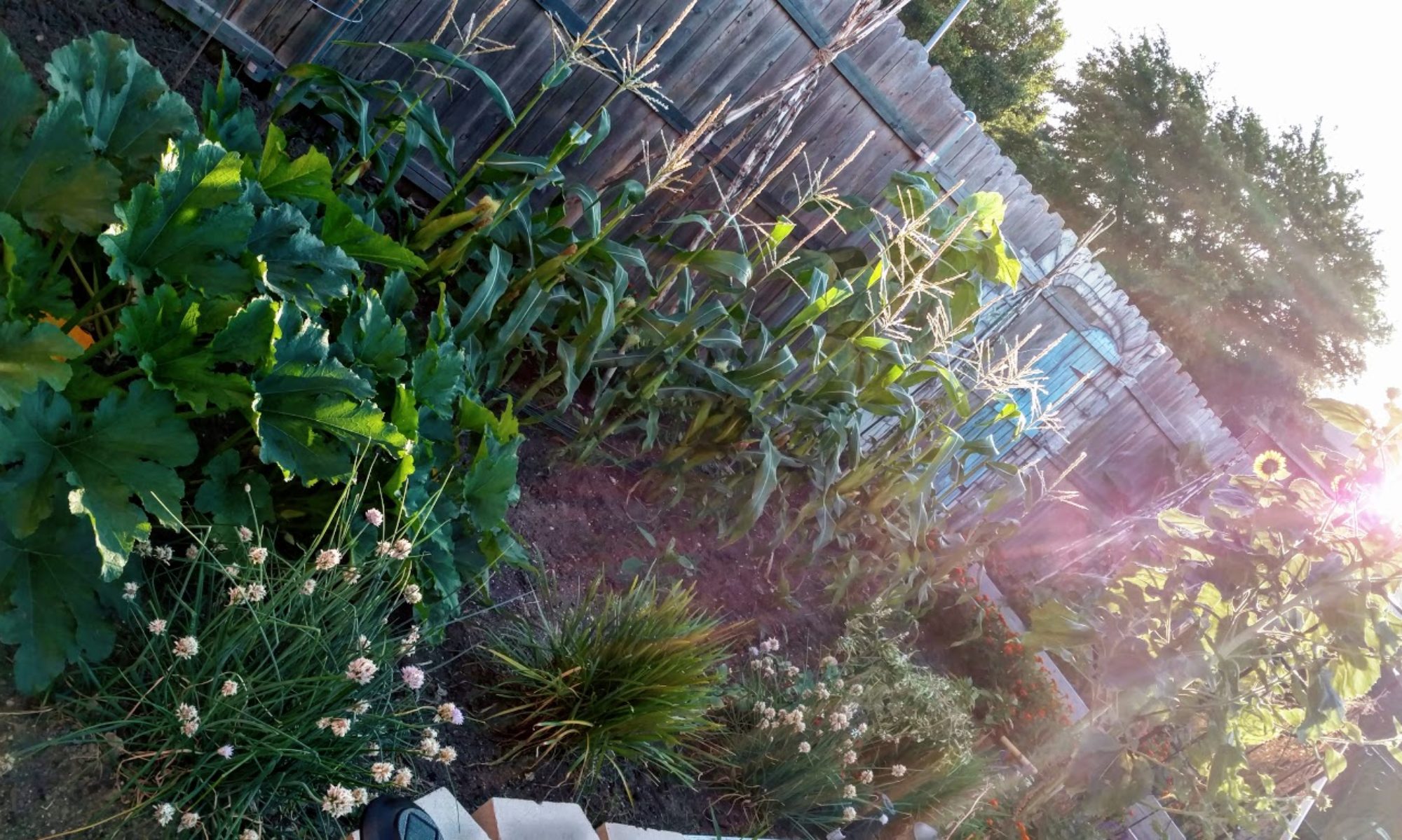
Mixing low level plants with tall or super tall plants is one of the simplest things to do to add height to a garden.  Take for example the Day lilies growing here. These are  ground level plants and will get no more than two to three feet tall on the shrub side.  They are bordering cosmos and Zinnias which will grow three to four feet tall.  All of these flowers are then growing under Giant sunflowers which will rise to over ten feet tall!  Layering plants in a garden provides a continuous expansion for our eyes. Giving a person something to look at all the way to the sky! 

Mixing in Ground and Raised Beds 

Enjoying the View down the path


A mixture of inground and raised beds across a space is another wonderful way to add height and visual interest in a garden.  Take for example the way this  yard appeared before any beds were added.  The lines were flat, even the areas where inground gardens had been added still appeared flat in the space.  However, adding a single raised bed in the corner completely changed the layout even before plants came in. Adding a taller raised bed along the fence line changed things.   All of a sudden there were three levels of items to look at and grow in.  Plants at the ground layered with height, plants raised up.  This can be seen in the far back corner as well.  All plants were at the ground level. Having a mix simply makes the space look and feel more interesting.  

Note all my raised beds are from Vego Garden!

Using Potted Plants or a mix of pots 

Playing with Various Shapes of Planters

Once the layers of plants and various raised beds have been decided, pulling pots into the mix can really add flair. One can simply have fun with pots.  From shapes and sizes that are small and round to square or long pots are simply fun.  Take for example the two Vego Garden Planters added the top of the shelter above the raised bed  Simply adding these two pots pulled even more height to the mix,  The raised space now ladders the eyes up another layer and shows a blast of green surrounding the raised beds below it.  

Using arbors or Teepees

Arbors or teepees can transform any garden right away!  After all they are tall and have shapes and colors of their own allowing plants to climb up them.  All of a sudden what was on the ground can sore into a space giving shadows and visuality that just wasn't there before.  so never hesitate to add a Arbor for plants to give height to an area.

In Conclusion

Using height in a garden with beds and pots or inground plants is a wonderful way to help a space shine.  Come back and we will look at tips for the second item Color; and, how color can transform a space.  While your reading, here are some of the other blogs that can help you with growing the plants seen in this space.  Ill be adding more soon so check back often.

Growing Lavender

Growing Potatoes

The Planning

Growing Skyscraper Sunflowers


Growing Garlic

There are few smells as well-known as garlic!  The aroma itself brings happiness and growing garlic is so much better as the flavor of fresh garlic cannot be beat!


Categories of Garlic

Although there are many different kinds of garlic most can be classified in two distinct categories known as Soft Neck and Hard Neck.

Soft neck garlic:

Soft neck garlic has stronger white outer layers of skin that makes them best for long periods of storage.  These are often found in grocery stores or markets. Soft neck garlic does not have the long flowering stems found on hard neck garlic.  This feature makes them better for braiding and they actually grow best in milder winter areas.

Hard neck garlic:  

True to its name, hard neck garlic sends out a long woody flowering stem that generates edible scapes.  Hard neck is also cold weather hardy so it’s best for areas that have stronger winters. In contrast to soft neck, it has a thinner more papery skin that is easier to peel.  However, this thinner skin means that it will not store as long as your soft neck varieties.

Elephant garlic is often listed as its own category; however, it is not. It does fit within either the soft neck or the hard neck varieties yet it is worth a call out as it produces the largest of the bulbs with only 4 to 6 bulbs per garlic head and has the mildest of the flavors.    

Growing Garlic

Garlic is one of the easiest plants to grow with very few enemies.  In addition it offers some of the best natural protection making it a great companion plant for a large range of plants.  One can have the best crops by following these simple tips

  • Plan to plant your garlic in the fall.  Allow for approximately 4 to 6 weeks before your first cold spell hits your area.  Garlic be grown in early January; however its best in fall for two reasons: 1: garlic really needs a cold spell to set well and planting in the winter ensures this process.  2:  they need to have strong established roots by spring so that the plant can then focus on a large healthy garlic head.
  • Garlic takes approximately 6 months to fully form. This means once planted in fall they will be in your beds throughout your spring growing period.  As such, choose your location wisely.  Think about the plants you plan to grow in spring knowing you will be planting around them during this time.  
  • Grow garlic in full sun locations.  For heavy heat areas plan for some spots with some shade in the hottest parts of the day.


  • Separate your bulbs from the head, leave the paper skin on them and plant them within 2 days of separation.  Make sure you select the largest and healthiest bulbs from each garlic head.


  • Plant in well-drained soil with good organic matter making sure you have worked the soil so that its soft and pliable for your garlic to grow in. Place a bit of Epsom and bone mill or fish fertilizer in the soil prior to dropping them in!  
  • Dig the holes approximately 2-4 inches deep.  Sites will state to list them 6 inches apart. I have pushed this at times and planted them 3 inches apart.  I would not recommend any closer as you want the bulbs to have plenty of room to grow.
  • If you planted last year, practice rotating your garlic annually this will deter returning pests to your area!

One may be tempted to grow garlic from the stores;  however, I don’t recommend this. You will not know for sure what type you have or how they were grown. Yes,  garlic can seem expensive at first; however, keep in mind you will get a full head of garlic from each bulb planted.  In addition if dried and stored properly one will be able to use their own garlic for continued growth season after season going forward.

Companion Planting

On a personal note I love to scatter garlic throughout my beds. Growing them where I have open spaces or boarders. It offers a natural repellent for  plants and can deter deer and rabbit making it an exceptional companion plant.  Here I have placed it all along the back in the my lettuce and cabbage beds to help detour pests. 


Pests deterred by garlic

  • Gnats
  • Spider Mites
  • Aphids
  • Snails
  • Ants

Plants that benefit from garlic

  • Fruit trees
  • Corn
  • Dill
  • Beets
  • Kale
  • Spinach
  • Potatoes
  • Carrots
  • Eggplants
  • Tomatoes
  • Peppers
  • Cabbage
  • Cauliflower
  • Broccoli Kohlrabi
  • Roses
  • Geraniums

Do not grow garlic around

  • asparagus
  • peas
  • beans
  • sage
  • parsley or
  • onions (onions and garlic attract the same enemies so it’s best not to plant them together)

Quick Video On Planting Garlic


Accompanying Articles

Knowing When to Harvest Your Garlic

Growing and Caring for Garlic Chives


Herbal Face Food Plant of the Month: Yarrow

It's time for the Herbal Face Food(HFF) Plant of the Month!  A monthly dedication to the various plants used by HFF to create their amazing skin care products.  This months HFF plant moment is dedicated to the amazing Yarrow. 

Yarrow has become one of my favorite wild herbs. Those who don't have it in their gardens probably are not aware of its medicinal and health benefits. Yarrow provides vitamins A, C potassium, zinc, magnesium, calcium, phosphorus, and niacin.  Yarrow is also commonly known as  an astringent with anti-inflammatory properties which is one of the main draws  and with all of this its no wonder HFF wants Yarrow in their amazing serums.

About Yarrow

Yarrow originated from Europe and Asia and is now commonly found all around the globe. The scientific name for Yarrow is Achillea millefolium other names include common yarrow (the white wild Yarrow), nosebleed plant or soldier's wound wort.   Several of these names tell us clearly that one of the benefits of Yarrow is blood and wound dressing.   Dr. Nicole Apelian describes Yarrow in her book, The Lost Book of Herbal Remedies as, “nature's tourniquet.” 

Yarrow comes in several colors from white to light pinks and purples to red and yellow.  kidadl.com has a great list of specific types including their colors!   I have read however that common Yarrow, that grows wild with white flowers is the best and strongest for medicinal use.  

Benefits of Yarrow

The benefits of Yarrow are so vast, it truly is an amazing plant for skin.  Here are just a few of the uses:  

    • Yarrow can be used in teas fresh or dried for nausea or stomach flues, hard menstrual cycles or reducing fevers (as it creates sweating).  Women that are pregnant should not drink Yarrow tea.  
    • Powder from dried yarrow can be used to stop bleeding (many sites caution not to use on deep wounds as it will heal it too quickly from the inside). 
    • Fresh yarrow leaves can also be used as a poultice for bleeding and the leaves can be used for stopping nose bleeds. 
    • Yarrow helps reduce swelling in bruises, or sprains or can be used as a antibacterial on scratches or minor cuts. 
    • Yarrow flowers can be used in baths for itchy skin or hives.  
    • The leaves and flowers can be made into a tincture with Alcohol or as an oil in olive oil or carrier oils.  It can even be made into a salve with beeswax and infused yarrow oil.
    • Yarrow can be substituted for hops and barley in beer and and mead.

Continue The Journey: Read more about growing and using this wonderful plant:

Brought to you by Herbal Face Food

The plant of the month series brought to you by  Herbal Face Food.  A company I'm very happy to support.  Each of their products are made with 100% plants! The most powerful plants in the world.   As they say, "HFF is not plant based it's plant powered" bringing together up to 100 different plants depending on the product.  HFF is the only 100% plant based skin care product on the market.  Note: I do make a small commission on  referrals.  As a result I'm able to offer a 20% discount to my readers along with tips on how to grow and use these same wonderful plants in your own home or plot gardens.